Era I · c. 1020–1439
From the Hawk's Castle
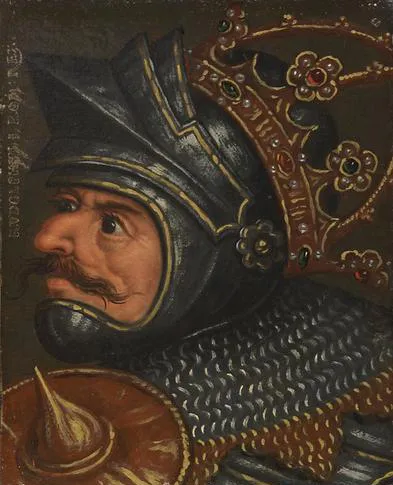
Around 1020 the family built the Habichtsburg in today's Swiss Aargau. Rudolf I was elected German king in 1273 and, five years later, took Austria from Ottokar II of Bohemia.
Overview
Early in the eleventh century the Swabian noble Radbot built the Habichtsburg on a hill in the Aargau, in today's Switzerland. Over the next two centuries the family gathered lands along the upper Rhine and the northern foothills of the Alps — but it remained one comital house among many.
In 1273, after twenty years of Interregnum, the German princes elected Rudolf I king, assuming that a fifty-five-year-old count posed no threat. Instead, on the Marchfeld in 1278, Rudolf defeated and killed Ottokar II of Bohemia, seized Austria and Styria, and gave them to his sons. The family's centre of gravity moved from Switzerland to Vienna.
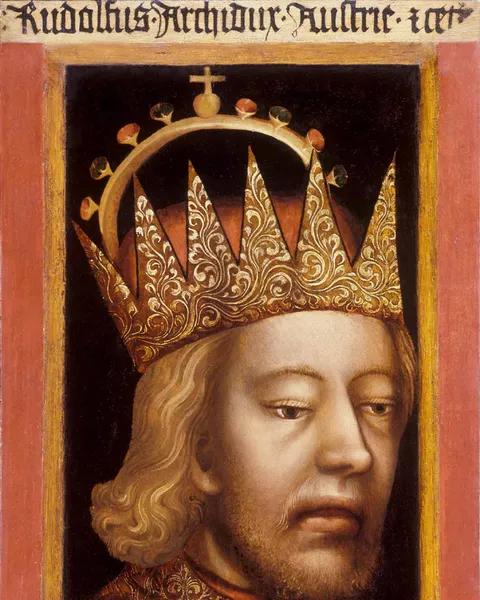
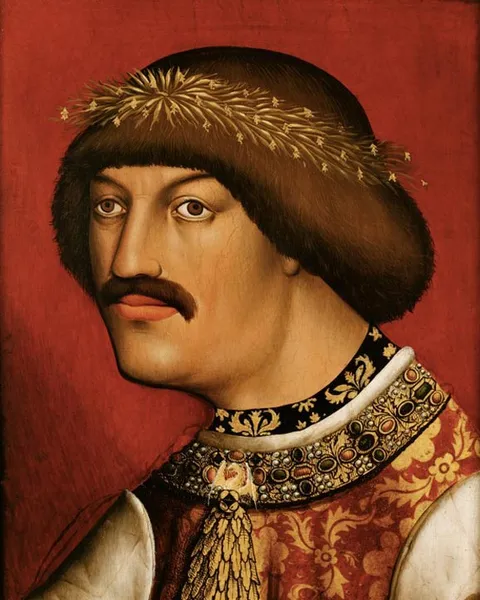
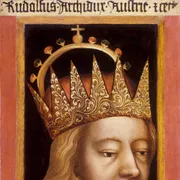
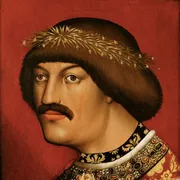
For the next 150 years the German crown repeatedly slipped away, and the Swiss Confederation picked off the family's Swiss lands: Duke Leopold III fell at Sempach in 1386, and in 1415 even the Aargau, home of the Habichtsburg, was lost. Rudolf IV forged the Privilegium Maius and founded the University of Vienna to raise Austria's standing. In 1438 Albert II was elected king, and the imperial crown almost never left the Habsburgs again.
Imperium
The Changing Map
- Habsburg lands
- Swabian and Swiss lands
- Austria and Styria, 1282
- Austrian hereditary lands
- Hungary and Bohemia under Albert II (1437–1439)
- Swiss lands lost
Borders are indicative only, approximated from modern administrative regions.
1273
1273: Counts in Swabia
When Rudolf I was elected king, the family's lands lay in the Aargau and around Zurich in today's northern Switzerland, and in Upper Alsace — a leading house of south-west Swabia, still far from Vienna.
1282
1282: Austria Won
After the Marchfeld, Rudolf invested his sons with Austria and Styria. The family now straddled the Alps, and its centre of gravity shifted east to Vienna.
1439
1439: Homeland Lost, Two Crowns Gained
Carinthia and Carniola (1335), Tyrol (1363), the Breisgau (1368) and Trieste (1382) were added, but the Swiss lands were gone by about 1415. Through marriage Albert II also became King of Hungary and Bohemia — but he died within a year and both crowns slipped away.
Stemma
Family Tree
The principal figures of this era. Gold frames mark Habsburgs; diamonds mark marriages. Each person appears once, so where cousins married, several lines of descent converge on the same figure.
Chronica
Chronology
- 1020
The Habichtsburg is built
Around 1020–1030 the family built the Habichtsburg in today's Aargau, Switzerland, from which the name "Habsburg" derives.
- 12731 October 1273
Rudolf I elected king
Ending the twenty-year Interregnum, the princes chose a modest Swabian count, Rudolf of Habsburg, as German king.
- 127826 August 1278
Battle on the Marchfeld
Rudolf I defeated and killed Ottokar II of Bohemia, winning Austria and Styria. In 1282 he invested his sons with them, and Vienna became the family's centre.
- 1359
The forged Privilegium Maius
Rudolf IV forged a set of charters granting Austria special privileges, including the title of archduke. A century later Frederick III confirmed them.
- 136512 March 1365
University of Vienna founded
Rudolf IV founded the University of Vienna, today the oldest surviving university in the German-speaking world.
- 13869 July 1386
Battle of Sempach
The Swiss Confederation defeated and killed Duke Leopold III of Austria. Habsburg holdings in Switzerland were lost one by one; in 1415 even the Aargau, home of the Habichtsburg, fell to the Swiss.
- 143818 March 1438
Albert II elected king
The Habsburgs regained the German crown. Albert II died the next year and was succeeded by his kinsman Frederick III.