Charles V

House of Habsburg

Charles V

查理五世Karl V. / Carlos I

Born
24 February 1500, Ghent
Died
21 September 1558, Yuste

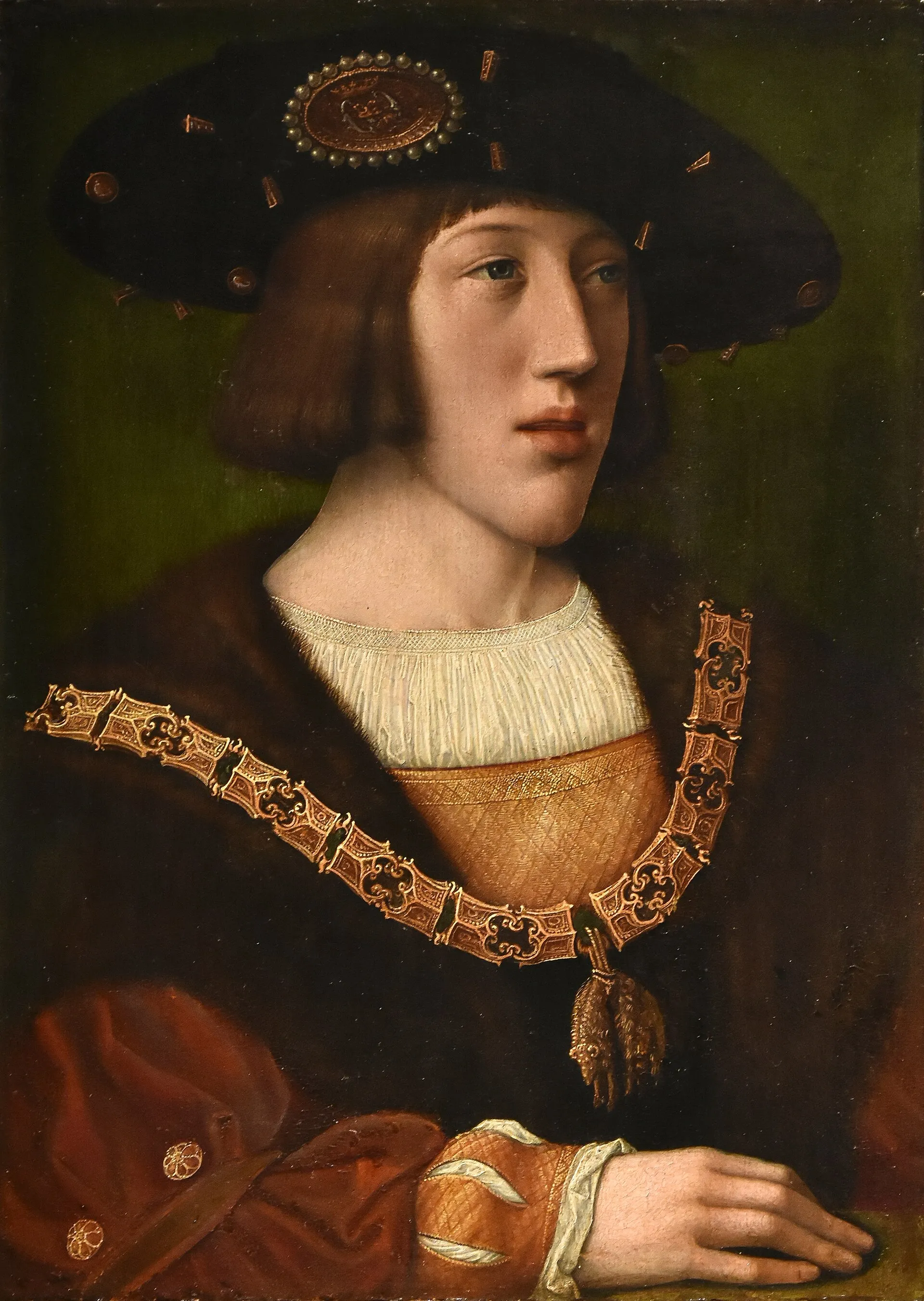
Heir to all four of his grandparents, he ruled an empire on which the sun never set. He abdicated in 1556, dividing Spain and Austria between his son and his brother.

A full biography is in preparation. The details below are generated from the site's database of people.

Principal Titles

  • King of Spain (Charles I)1516–1556
  • Holy Roman Emperor1519–1556

Parents

Matrimonium

Marriages & Children

Marriage 1

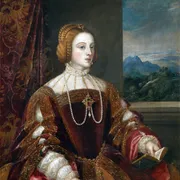
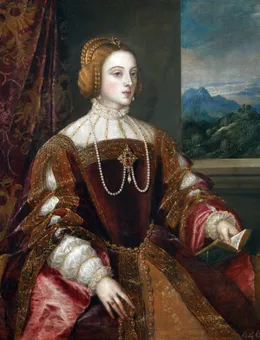
Isabella of Portugal

1503–1539◆Married 10 March 1526, Seville

First cousins, both grandchildren of the Catholic Monarchs. Isabella brought a rich dowry, and the marriage was happy; after her death Charles never remarried.

Children

Stemma

Family Tree

Parents, grandparents, spouses and descendants. Gold frames mark members of the House of Habsburg; diamonds mark marriages, with the year alongside. Select a person to open their entry.

Mary of Burgundy1457–1482
Maximilian I1459–1519
Charles V1500–1558
Ferdinand I1503–1564
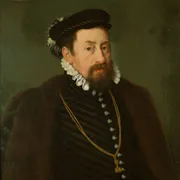
Maximilian II1527–1576
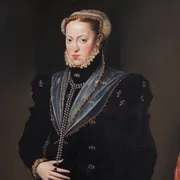
Maria of Spain1528–1603
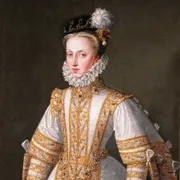
Anna of Austria1549–1580
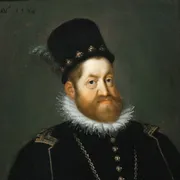
Rudolf II1552–1612
1526
1521
1469
1477
1548
1570
1554
1496

Chronica

Chronology

  1. 151912 January 1519

    Death of Maximilian

    Died at Wels and was buried at Wiener Neustadt. That June his grandson Charles was elected emperor.

  2. 151928 June 1519

    Charles V elected emperor

    Funded by huge loans from the Fugger bank, Charles outbid Francis I of France for the electors' votes. A long Habsburg–French rivalry began.

  3. 152118 April 1521

    Luther at the Diet of Worms

    Martin Luther refused before Charles V to recant his writings. The emperor outlawed him, but the Reformation could not be stopped.

  4. 152524 February 1525

    Battle of Pavia

    Imperial troops crushed the French in Italy and captured King Francis I, who was taken to Madrid.

  5. 15276 May 1527

    Sack of Rome

    Unpaid imperial troops mutinied and sacked Rome, trapping Pope Clement VII. Catholic Europe was horrified.

  6. 153024 February 1530

    Coronation at Bologna

    Pope Clement VII crowned Charles V at Bologna — the last time a pope crowned an emperor.

  7. 155525 September 1555

    Peace of Augsburg

    Negotiated by Ferdinand, it let each prince choose Catholicism or Lutheranism for his lands. Charles V's dream of religious unity was over.

  8. 155616 January 1556

    Charles V abdicates; the inheritance divides

    Charles V passed Spain, the Netherlands and Italy to his son Philip II, and the imperial title and Austria to his brother Ferdinand I. The dynasty split into Spanish and Austrian branches.

Image Credits

  • Anna of Austria — Alonso Sánchez Coello, circa 1571. Wikimedia Commons, Public domain.
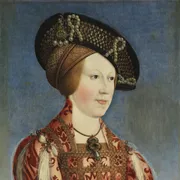
  • Anna of Bohemia and Hungary — Hans Maler zu Schwaz, 1519. Wikimedia Commons, Public domain.
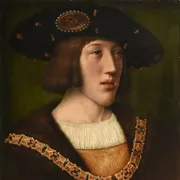
  • Charles V — Manner of Bernard van Orley / Bernard van Orley / After Bernard van Orley, circa after 1515. Wikimedia Commons, Public domain.
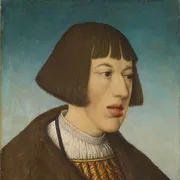
  • Ferdinand I — Hans Maler zu Schwaz, 1521. Wikimedia Commons, Public domain.
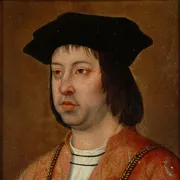
  • Ferdinand II of Aragon — Michael Sittow, late 15th century. Wikimedia Commons, Public domain.
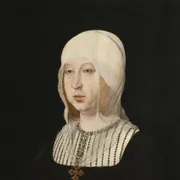
  • Isabella I of Castile — Juan de Flandes, between circa 1500 and circa 1504. Wikimedia Commons, Public domain.
  • Isabella of Portugal — Titian, 1548. Wikimedia Commons, Public domain.
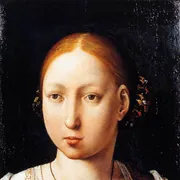
  • Joanna of Castile — Juan de Flandes, 1500. Wikimedia Commons, Public domain.
  • Maria of Spain — Unidentified painter, after 1557. Wikimedia Commons, Public domain.
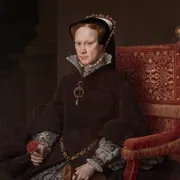
  • Mary I of England — Antonis Mor, 1554. Wikimedia Commons, Public domain.
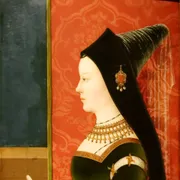
  • Mary of Burgundy — Attributed to Niklas Reiser, circa 1500. Wikimedia Commons, Public domain.
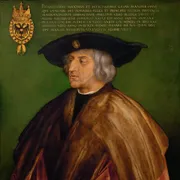
  • Maximilian I — Albrecht Dürer, 1519. Wikimedia Commons, Public domain.
  • Maximilian II — Workshop of Nicolas Neufchatel, 1566. Wikimedia Commons, Public domain.
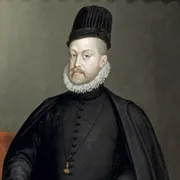
  • Philip II of Spain — Sofonisba Anguissola, 1565. Wikimedia Commons, Public domain.
  • Philip III of Spain — Pedro Antonio Vidal, 1617. Wikimedia Commons, Public domain.
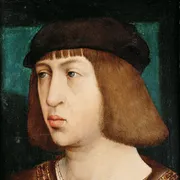
  • Philip the Handsome — Attributed to Juan de Flandes, between 1496 and 1500. Wikimedia Commons, Public domain.
  • Rudolf II — Joseph Heintz the Elder, 1594. Wikimedia Commons, Public domain.