Maximilian I

House of Habsburg

Maximilian I

馬克西米利安一世

“The Last Knight”

Born
22 March 1459, Wiener Neustadt
Died
12 January 1519, Wels

Won the Burgundian Netherlands by marriage, then arranged the Spanish and Jagiellonian matches that made his descendants masters of half of Europe.

Son of the Emperor

Maximilian was born at Wiener Neustadt on 22 March 1459. His father, Frederick III, was Holy Roman Emperor, but the title meant less than it sounded: the emperor had no standing army, no reliable revenue, and had to fight his own relatives for control of Austria. In 1462 Frederick’s brother Albert VI led the citizens of Vienna in a siege of the Hofburg. Three-year-old Maximilian was trapped inside with his parents until a Bohemian army relieved them. He learned early that the Habsburg position was anything but secure.

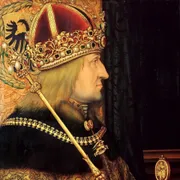
Frederick was cautious and slow, but immensely patient, and convinced that his house was destined to rule. He had the five vowels “AEIOU” carved on his books and buildings, a device later read as Austriae est imperare orbi universo — “it is Austria’s destiny to rule the whole world”. His son was his opposite: restless, outgoing, devoted to tournaments and the hunt, and quick to pick up languages.

The Burgundian Bride

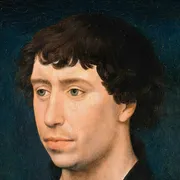
The richest prince in the West was Charles the Bold, Duke of Burgundy. His lands stretched from Burgundy in eastern France to Flanders and Holland on the North Sea, taking in the great trading cities of Ghent, Bruges and Antwerp. Charles had one child, a daughter named Mary. Whoever married Mary would win these lands.

Frederick and Charles met at Trier in 1473 to negotiate a match and a royal crown, but the talks collapsed. In 1476 the betrothal was finally agreed. The following January Charles was killed at Nancy. Louis XI of France at once seized the duchy of Burgundy proper and tried to marry Mary to his own son, absorbing the whole inheritance. Mary wrote to her fiancé for help. On 19 August 1477 the eighteen-year-old Maximilian arrived in Ghent and married her.

It was a political match, but a happy one. The couple spoke French together, and Maximilian soon learned Flemish as well. He took over the war with France and defeated the French at Guinegate in 1479. They had three children: Philip, Margaret, and Francis, who died in infancy.

In March 1482 Mary fell from her horse while hawking near Bruges and died some weeks later, aged twenty-five. The estates of the Netherlands promptly refused to accept Maximilian as regent, rallied to four-year-old Philip, and made peace with France at Arras: the duchy of Burgundy went to France, and two-year-old Margaret was betrothed to the Dauphin, with Franche-Comté and Artois as her dowry. For the next decade Maximilian struggled against the rebellious Flemish towns; in 1488 the citizens of Bruges held him prisoner for nearly four months.

Return to Austria

In 1486 Maximilian was elected King of the Romans at Frankfurt, making him heir to the imperial title. Austria, meanwhile, was in no better state. King Matthias Corvinus of Hungary had taken Vienna in 1485, and Frederick III was reduced to wandering the Empire.

In 1490 the tide turned. His cousin Sigismund ceded him Tyrol, whose silver mines became Maximilian’s chief source of income and whose capital, Innsbruck, his favourite residence. That same year Matthias died and Maximilian recovered Vienna. In 1491 he made peace with the new Hungarian king, Vladislaus II, at Pressburg; the treaty provided that the Habsburgs would inherit Hungary should the Jagiellonian line die out. Thirty-five years later, it did.

His diplomacy elsewhere went badly. In 1490 the widowed Maximilian married Anne, Duchess of Brittany, by proxy, hoping to encircle France from the west. Charles VIII of France invaded Brittany, forced Anne to marry him instead, and sent back his own betrothed — Maximilian’s daughter Margaret. Within a year Maximilian had lost both a wife and his daughter’s crown. The Treaty of Senlis in 1493 at least restored Franche-Comté and Artois.

Frederick III died in 1493. The next year Maximilian married Bianca Maria Sforza, niece of the ruler of Milan, for a dowry of some 400,000 ducats. The marriage was childless and cool.

The Spanish Double Marriage

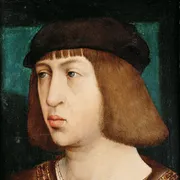
In 1494 Charles VIII invaded Italy, and Europe’s powers combined against France. Maximilian agreed a “double marriage” with Ferdinand and Isabella, the Catholic Monarchs of Spain: in 1496 Philip married the Spanish princess Joanna, and in 1497 Margaret married the Spanish heir, John.

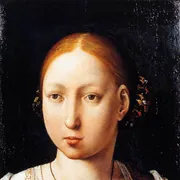
The plan assumed that John would inherit Spain and the Habsburgs would simply gain an ally. But John died six months after his wedding; Joanna’s elder sister Isabella and her infant son Miguel followed in 1498 and 1500. Joanna became heiress to Castile and Aragon. In 1500, at Ghent, she gave birth to her eldest son, Charles.

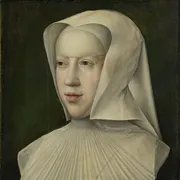
Isabella I died in 1504 and Joanna inherited Castile. Philip arrived in Spain as King of Castile in 1506 and died suddenly at Burgos a few months later. Joanna’s mental state deteriorated, and from 1509 her father kept her confined. In the Netherlands Maximilian appointed his daughter Margaret governor; at Mechelen she raised her nephew Charles. When Ferdinand died in 1516, sixteen-year-old Charles became ruler of both Castile and Aragon.

“Let Others Wage War”

On 22 July 1515 St Stephen’s Cathedral in Vienna saw an unusual wedding. Maximilian’s granddaughter Mary married Prince Louis of Hungary, while Louis’s sister Anna was married to one of Maximilian’s grandsons — with the fifty-six-year-old emperor himself standing in for the absent groom. Anna eventually married Ferdinand in 1521.

In 1526 Louis II was killed fighting the Ottomans at Mohács, leaving no heir. Through his wife’s claim, Ferdinand secured the crowns of Bohemia and Hungary, carrying Habsburg power deep into the Danube basin.

Later writers summed up this story in a Latin couplet: Bella gerant alii, tu felix Austria nube — “Let others wage war; you, happy Austria, marry.” Its author is unknown; some attribute it to Matthias Corvinus. It is only half true. Maximilian was almost constantly at war — with France, Venice, the Swiss and Hungary — and the fruits of his marriages depended largely on deaths he could not control.

Emperor and Reformer

The Holy Roman Empire comprised hundreds of princes, bishoprics and free cities, and the emperor’s power was limited. The Diet of Worms in 1495 proclaimed a Perpetual Public Peace, outlawing private war, created the Imperial Chamber Court, and attempted an Empire-wide tax, the Common Penny. The tax largely failed, but the court and the Imperial Circles created soon afterwards lasted until the Empire’s end.

In 1499 Maximilian lost the Swabian War to the Swiss Confederation. After the Peace of Basel the Swiss were independent of the Empire in all but name, ending any Habsburg hope of regaining their ancestral Swiss lands.

By tradition a German king became emperor only when crowned by the pope in Rome. In 1508, with Venice blocking his road south, Maximilian took the title of Emperor-elect at Trent, with the consent of Pope Julius II. His successors followed his example; only Charles V would ever again be crowned by a pope.

The Last Knight

Maximilian loved the tournament, designed armour himself, improved artillery and created the Landsknechte, Germany’s pike-armed mercenary infantry. He was also among the first rulers to grasp the power of print. He commissioned Dürer and others to produce the gigantic woodcut Triumphal Arch, and devised the allegorical poem Theuerdank (1517) and the autobiographical romance Weisskunig, casting himself as the ideal knightly king. Posterity called him “the Last Knight”.

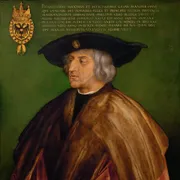
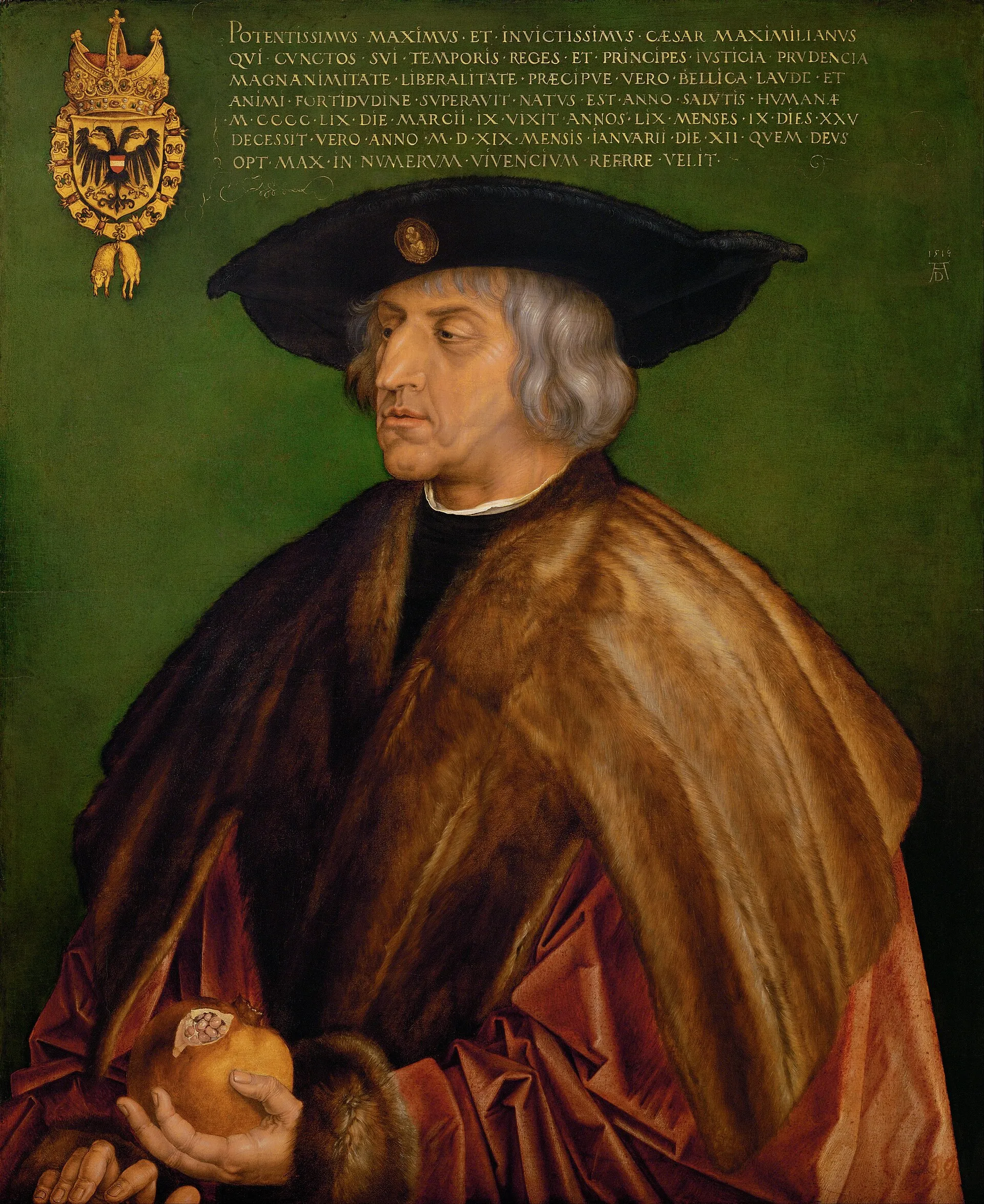
During the Diet of Augsburg in 1518 Dürer drew him in charcoal, and the following year worked the sketch up into the oil portrait shown on this page. The emperor holds a pomegranate, his personal emblem: its many seeds within a single skin were read as many peoples united under one ruler.

Maximilian died at Wels on 12 January 1519. He had planned a vast tomb at Innsbruck, ringed by more than twenty life-size bronze figures, but he was buried at St George’s Cathedral in Wiener Neustadt, where he was born; the court church at Innsbruck holds an empty cenotaph. That June his grandson Charles was elected emperor, heir to the legacies of all four of his grandparents.
Matrimonium

Marriages & Children

Marriage 1

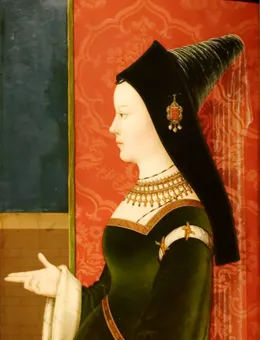
Mary of Burgundy

1457–1482◆Married 19 August 1477, Ghent

Brought the Burgundian Netherlands and Franche-Comté to the Habsburgs, turning an Alpine dynasty into a Western European power.

Children

Marriage 2

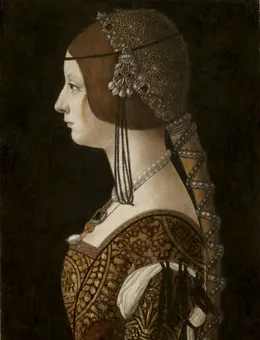
Bianca Maria Sforza

1472–1510◆Married 16 March 1494, Hall in Tirol

Preceded by a proxy wedding in Milan in November 1493. Childless, it brought Maximilian a dowry of some 400,000 ducats.

Children

No children

Stemma

Family Tree

Parents, grandparents, spouses and descendants. Gold frames mark members of the House of Habsburg; diamonds mark marriages, with the year alongside. Select a person to open their entry.

Frederick III1415–1493
Charles the Bold1433–1477
Mary of Burgundy1457–1482
Maximilian I1459–1519
Charles V1500–1558
Ferdinand I1503–1564
Mary of Hungary1505–1558
1469
1452
1494
1477
1496

Imperium

The Changing Map

ViennaInnsbruckGhentBrusselsDijonParisToledoBarcelonaNaplesPalermoRomeBuda147714931519
  • Austrian hereditary lands
  • Austrian hereditary lands
  • Burgundian inheritance
  • Burgundian lands lost to France
  • Maximilian I: Austria
  • Mary of Burgundy: the Netherlands
  • Isabella I: Castile
  • Ferdinand II: Aragon and southern Italy

Borders are indicative only, approximated from modern administrative regions.

  1. 1477

    Before 1477: An Alpine Dynasty

    Before Maximilian's marriage, the Habsburg lands lay in the eastern Alps — Upper and Lower Austria, Styria, Carinthia, Carniola and Tyrol — with scattered "Further Austrian" holdings on the upper Rhine. In size and wealth, this was a middling princely house of the Empire.

  2. 1493

    1477–1493: The Burgundian Inheritance

    Mary brought the Netherlands and Franche-Comté, with Ghent, Bruges and Antwerp — some of the richest trading cities in Europe. The duchy of Burgundy itself fell to France (hatched). After more than a decade of war and the Treaty of Senlis in 1493, the Habsburgs kept the rest.

  3. 1519

    1519: Four Grandparents, One Heir

    When Maximilian died, his grandson Charles held or stood to inherit the legacies of all four grandparents: Austria from Maximilian, the Netherlands from Mary, Castile and the Americas from Isabella, and Aragon, Naples, Sicily and Sardinia from Ferdinand. The American colonies lie beyond this map.

Chronica

Chronology

  1. 145922 March 1459

    Birth of Maximilian

    Born at Wiener Neustadt. Frederick III named him after the obscure Saint Maximilian of Celeia — a name never before used in the dynasty.

  2. 147719 August 1477

    The wedding at Ghent

    Eighteen-year-old Maximilian married Mary of Burgundy at Ghent and took over the war against France.

  3. 14797 August 1479

    Battle of Guinegate

    Maximilian, fighting on foot among his pikemen, defeated the French and saved the southern Netherlands.

  4. 148227 March 1482

    Death of Mary of Burgundy

    Mary died weeks after a fall while hawking near Bruges. The Netherlands estates refused Maximilian the regency and rallied to four-year-old Philip.

  5. 148223 December 1482

    Treaty of Arras

    The duchy of Burgundy went to France; two-year-old Margaret was betrothed to the Dauphin, with Franche-Comté and Artois as her dowry.

  6. 148616 February 1486

    Elected King of the Romans

    Elected at Frankfurt as heir to the imperial dignity and crowned at Aachen that April.

  7. 1488February 1488

    Captive in Bruges

    The citizens of Bruges held Maximilian prisoner for nearly four months, releasing him only after he swore to give up the regency.

  8. 1490

    Tyrol gained

    His cousin Sigismund ceded Tyrol; after the death of Matthias Corvinus of Hungary, Maximilian retook Vienna, lost five years earlier.

  9. 14917 November 1491

    Peace of Pressburg

    Peace with Vladislaus II of Hungary, with the promise that the Habsburgs would succeed should his Jagiellonian line fail.

  10. 149323 May 1493

    Treaty of Senlis

    Charles VIII, having married Anne of Brittany instead, returned Margaret and her dowry; Franche-Comté and Artois came back to the Habsburgs.

  11. 149319 August 1493

    Death of Frederick III

    Frederick III died at Linz, and Maximilian inherited all the Austrian hereditary lands.

  12. 149416 March 1494

    Marriage to Bianca Maria Sforza

    A marriage for Milanese money; in return Maximilian recognised her uncle Ludovico as Duke of Milan.

  13. 1495

    Diet of Worms

    Proclaimed the Perpetual Public Peace, outlawing private war, and created the Imperial Chamber Court — the start of imperial reform.

  14. 1499

    Swabian War

    Defeat by the Swiss Confederation; after the Peace of Basel the Swiss were de facto independent of the Empire, ending any Habsburg hope of regaining their ancestral Swiss lands.

  15. 15084 February 1508

    Proclaimed Emperor-elect

    Barred by Venice from marching to Rome, Maximilian took the title of Emperor-elect at Trent with papal consent. Emperors no longer needed a Roman coronation.

  16. 151522 July 1515

    The Vienna double wedding

    His granddaughter Mary married Prince Louis of Hungary, while Princess Anna was wed to one of his grandsons, with Maximilian himself standing proxy.

  17. 151912 January 1519

    Death of Maximilian

    Died at Wels and was buried at Wiener Neustadt. That June his grandson Charles was elected emperor.

Examen

Quiz

  1. 01In which year did Maximilian I marry Mary of Burgundy?

  2. 02Charles V inherited lands from each of his four grandparents. Which pairing is correct?

  3. 03In 1488 the citizens of which city held Maximilian prisoner for nearly four months?

  4. 04In the Vienna double wedding of 1515, the Habsburgs married into which dynasty?

  5. 05What did Maximilian's adoption of the title "Emperor-elect" at Trent in 1508 change for later emperors?

Further Reading

  • Benecke, Gerhard. Maximilian I (1459–1519): An Analytical Biography. London: Routledge & Kegan Paul, 1982.
  • Wiesflecker, Hermann. Kaiser Maximilian I.: Das Reich, Österreich und Europa an der Wende zur Neuzeit. 5 vols. Munich: Oldenbourg, 1971–1986.
  • Wheatcroft, Andrew. The Habsburgs: Embodying Empire. London: Viking, 1995.
  • Rady, Martyn. The Habsburgs: The Rise and Fall of a World Power. London: Allen Lane, 2020.
  • Terjanian, Pierre, ed. The Last Knight: The Art, Armor, and Ambition of Maximilian I. New York: The Metropolitan Museum of Art, 2019.

Image Credits

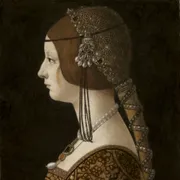
  • Bianca Maria Sforza — Giovanni Ambrogio de Predis, 1493. Wikimedia Commons, CC0.
  • Charles the Bold — Rogier van der Weyden, 1454. Wikimedia Commons, Public domain.
  • Charles V — Manner of Bernard van Orley / Bernard van Orley / After Bernard van Orley, circa after 1515. Wikimedia Commons, Public domain.
  • Eleanor of Austria — Joos van Cleve, kurz nach 1530 (?). Wikimedia Commons, Public domain.
  • Eleanor of Portugal — Master of the Legend of the Magdalene, between 1500 and 1525. Wikimedia Commons, Public domain.
  • Ferdinand I — Hans Maler zu Schwaz, 1521. Wikimedia Commons, Public domain.
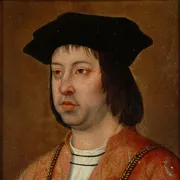
  • Ferdinand II of Aragon — Michael Sittow, late 15th century. Wikimedia Commons, Public domain.
  • Frederick III — Attributed to Hans Burgkmair the Elder, late 15th century. Wikimedia Commons, Public domain.
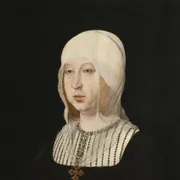
  • Isabella I of Castile — Juan de Flandes, between circa 1500 and circa 1504. Wikimedia Commons, Public domain.
  • Joanna of Castile — Juan de Flandes, 1500. Wikimedia Commons, Public domain.
  • Margaret of Austria — Bernard van Orley, between circa 1510 and circa 1520. Wikimedia Commons, Public domain.
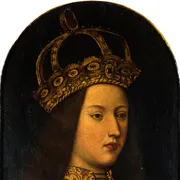
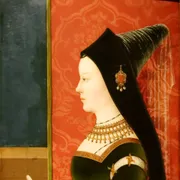
  • Mary of Burgundy — Attributed to Niklas Reiser, circa 1500. Wikimedia Commons, Public domain.
  • Mary of Hungary — Attributed to Hans Maler zu Schwaz, 1520. Wikimedia Commons, Public domain.
  • Maximilian I — Albrecht Dürer, 1519. Wikimedia Commons, Public domain.
  • Philip the Handsome — Attributed to Juan de Flandes, between 1496 and 1500. Wikimedia Commons, Public domain.
  • Dürer, Triumphal Arch — Albrecht Dürer, 1515 (1799 edition). Wikimedia Commons, CC0.